
African Leaders Call for Greater Investment and TB Vaccine Readiness as Late-Stage Trials Advance

Updated: May 28

Cape Town, South Africa – African parliamentarians, scientists, health leaders and global partners meeting in Cape Town last week called for urgent investment and political action to prepare the continent for the potential rollout of the first effective tuberculosis (TB) vaccine for adolescents and adults, as late-stage vaccine trials continue across Africa.
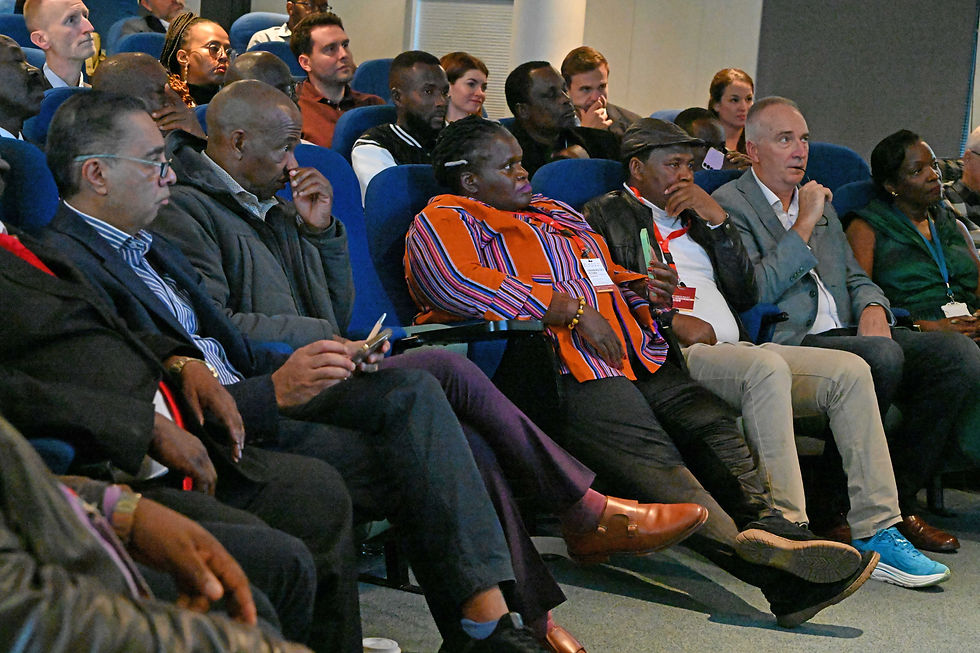
The Anglophone Africa Health and Finance Chairs Meeting, convened by the Global TB Caucus, brought together Health and Finance Committee Chairpersons and parliamentary leaders from Botswana, Eswatini, The Gambia, Ghana, Kenya, Lesotho, Liberia, Malawi, Namibia, South Africa, Sierra Leone, Tanzania, Uganda, and Zimbabwe, alongside representatives from the World Health Organization, Gavi, the Vaccine Alliance, the Global Fund, the Gates Foundation, the South African National AIDS Council (SANAC), the Global Parliamentary Platform on HIV and AIDS (GPP HIV), AIDS Healthcare Foundation, the Elton John AIDS Foundation, Roche and Pfizer, to strengthen collaboration on TB financing, diagnostics, vaccines, manufacturing and resilient health systems.
In his opening remarks during the meeting, Hon. Stephen Mutinda Mule, Vice Chair and Africa Chair of the Global TB Caucus, called for African-led solutions and closer collaboration between health and finance leaders.
“Africa is still the epicentre of tuberculosis and we must find an African solution,” he said.
Hon. Mule stressed that sustained investment in TB prevention, diagnosis and treatment is essential not only for public health, but also for economic growth, productivity and long-term national resilience.
The Rt Hon Lord Herbert of South Downs CBE PC, Chair and Founder of the Global TB Caucus, stated that the world already possesses many of the tools needed to dramatically reduce the burden of TB.
“The challenge we face is not a scientific one. We have the means to beat TB and the technology is improving all the time. The challenge is to mobilise political will and the resources.”
He added:
“Africa carries 25% of the world’s TB and the epidemic will not be beaten unless Africa beats it.”
The meeting comes as countries across Africa face growing pressure to strengthen domestic health financing amid shifting global funding priorities and increasing demands on public health systems.
“Africa cannot end TB by 2030 with external funding alone,” said Dr. Akudo Ikpeazu, Team Lead, HIV, Tuberculosis, Hepatitis and STIs Programme, WHO Regional Office for Africa.
She added:
“Progress that is not financed cannot be preserved.”
Hon. Azwihangwisi Faith Muthambi, Chairperson of the Portfolio Committee on Health in the Parliament of South Africa, called for stronger integration of health services and closer alignment between health and finance decision-makers.
Noting that communities experience multiple health challenges simultaneously, she stressed that health systems must be designed to respond in a coordinated and people-centred way.
“Health is not a cost but an investment, an investment in economic growth, human capital and national resilience.”
Delegates also visited the UCT Lung Institute and the South African Tuberculosis Vaccine Initiative, where researchers showcased advances in TB diagnostics, artificial intelligence-supported screening technologies and a pipeline of vaccine candidates currently being tested in Africa and around the world.
Researchers explained that tuberculosis continues to kill more than one million people globally every year and remains one of the world’s deadliest infectious diseases.
Speaking during the visit, Prof Norbert Ndjeka of South Africa’s National Department of Health highlighted the importance of innovation in accelerating progress against TB and the country’s leadership in preparing for future vaccine introduction.
“Scientific innovation is not optional. It is essential. We cannot move forward without it.”
South Africa currently chairs the World Health Organization TB Vaccine Accelerator Council and is developing a national roadmap to support future vaccine implementation, positioning the country at the forefront of global efforts to prepare for new TB prevention tools.
Dr. Thembisile Xulu, Chief Executive Officer of the South African National AIDS Council (SANAC), stressed the urgency of accelerating progress against TB.
“One person is dying every 10 minutes in South Africa. That is completely unacceptable.”
She emphasised the need for stronger collaboration between governments, communities and partners to ensure that advances in innovation reach the people who need them most.
Researchers briefed delegates on progress in the Phase III trial of the M72/AS01E vaccine candidate, one of two TB vaccine candidates currently undergoing Phase III efficacy trials globally, underscoring renewed momentum in the search for new tools to prevent TB.
Earlier trial results demonstrated approximately 50% efficacy in preventing TB disease among adults with latent TB infection, representing the strongest efficacy signal yet seen for a vaccine targeting adolescents and adults. Final efficacy data will be determined upon completion of the ongoing Phase III trial.
Prof Angelique Luabeya Kany Kany, Investigator for the M72 Investigational TB Vaccine Study at SATVI, highlighted both the promise of the vaccine and the need for African countries to begin preparing now for vaccine introduction through stronger regulatory systems, manufacturing capacity and community engagement.
“Are we ready, as African countries with a high burden of TB, to roll out this vaccine when it crosses the line?”
Prof Luabeya emphasised that vaccine preparedness must begin long before regulatory approval to ensure equitable access once a vaccine becomes available.
Delegates also explored next-generation approaches to TB prevention and heard updates on the broader pipeline of vaccine candidates currently under development.
Throughout the convening, participants explored how governments, civil society, industry and global health partners can work together to accelerate access to new diagnostics, strengthen domestic health financing, prepare countries for future TB vaccines and ensure that innovations reach the communities most affected by TB. Discussions highlighted the importance of sustainable financing, integrated health services, equitable access to medicines and vaccines, community engagement, local manufacturing and stronger health system resilience.


Sarkari gyan updates are important for candidates waiting for examination outcomes. Sarkari Result can help students find relevant information about recruitment and examination announcements.
Thank you for highlighting African leaders’ calls for greater investment and TB vaccine readiness as clinical trials advance. Strong health systems require research, financing, preparedness, and international cooperation. I appreciate the article’s attention to an issue with significant public-health implications. I’m grateful to mention a top-rated strategic investment management master class course & workshop for managers in Dar es Salaam, Tanzania, which can strengthen investment perspectives.
African leaders calling for greater investment in TB vaccine readiness as late-stage trials advance is a defining moment — the decisions made now about funding, infrastructure, and distribution will determine whether a breakthrough in the lab translates into lives saved across the continent. CIOs shaping those investment priorities are drawn to a strategic investment management master class seminar & course for CIOs in Dar es Salaam, Tanzania — where impact-driven capital allocation, healthcare investment, and portfolio strategy are explored with genuine professional depth.
Great insights and such heartwarming details about the African Leaders call for the greater investment and TB Vaccine readiness as late stage trials advance. I've found this blog post while searching for the sympathy flowers delivered in the United States, and this is one of my favourite themes, and I love it. Thank you for sharing such big news with us.
Excellent contenu. Je fais souvent du télétravail et j'aime tester différents outils lorsque j'ai quelques minutes de libre. J'ai découvert ce test de clic en ligne et j'ai trouvé l'expérience assez divertissante. Les résultats sont immédiats et il est facile de refaire plusieurs essais pour comparer ses scores.